
Stay at the forefront of brain injury research and care with the IBIA Webinar Series—featuring live, expert-led sessions from leading voices around the world. Explore upcoming webinars, register for sessions, and access detailed information on speakers and topics designed to inform and elevate your practice.
IBIA and NABIS members enjoy complimentary access to all live webinars, while non-members can register for $25 USD per session.
All registrants receive on-demand recordings following each event, with sessions becoming open access to the public after three months.
______________________________________________________________________________________________________________________________________________
Upcoming Webinars
A Decade of the DoC SIG: Building Momentum for the Next Ten Years
Speakers: Anna Estraneo, MD, Aurore Thibaut, PhD, and Caroline Schnakers, PhD
Moderators: Nathan Zasler, MD, and Liliana Teixeira, PhD
Date/Time: Wednesday, January 13, 2027, 11 AM ET
Organized by the Disorders of Consciousness Special Interest Group
Over the past 10 years, the IBIA Disorders of Consciousness Special Interest Group (IBIA DoC SIG) has fostered international collaborations to advance the science and clinical care of individuals with DoC. Through multicenter studies, systematic reviews, consensus processes and international surveys, the group has contributed to key developments in diagnosis, prognostication and interventions. Furthermore, DoC SIG initiatives have helped characterize worldwide clinical practices, evaluate implementation of international guidelines, and identify gaps in specialized care through international mapping efforts. As the field continues to evolve, DoC SIG is uniquely positioned to address emerging challenges, including the integration of advanced neuroimaging and electrophysiological biomarkers, refinement of diagnostic criteria for covert consciousness/CMD and development of evidence-based therapeutic interventions. This presentation will review a decade of scientific and clinical contributions from DoC SIG, highlight their impact on patient care and research, and discuss priorities for the next decade aimed at improving diagnosis, treatment, recovery, and quality of life for individuals with DoC and their families.
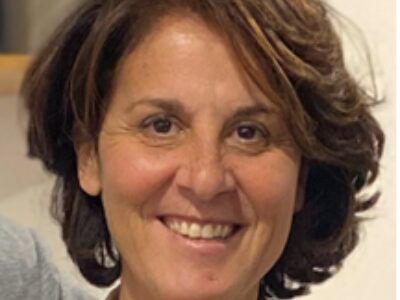
Anna Estraneo, MD, is a clinical neurologist and senior researcher with expertise in neurophysiology, neurorehabilitation, and the care of patients with severe acquired brain injury (sABI), with a particular research focus on the prognosis of patients with prolonged disorders of consciousness (pDoC). She has worked for the past 30 years as both a clinician and a researcher in rehabilitation centres dedicated to sABI. She was adjunct Professor at Dept. of Neurophysiology, University Federico II of Naples (2009-2016) and she got Italian Qualification as Associate Professor in Neurology. She is currently Head of the Personalized Rehabilitation for sABI (PeRABI) Research Unit at the IRCCS Don Gnocchi Foundation Scientific Institute in Florence and Sant’Angelo dei Lombardi, Italy; Co-Chair of the European Academy of Neurology (EAN) Scientific Panel on Neurorehabilitation; and Chair of the Working Group on sABI and DoC of the Italian Society of Neurology (SIN). She was a member of the EAN Task Force for the Guidelines on the Diagnosis of Coma and Chronic Disorders of Consciousness and is currently a member of the Task Force on the Guidelines on Neurotraumatology. She also serves as leader of the Diagnosis/Prognosis Subgroup of the Special Interest Group on Disorders of Consciousness of the International Brain Injury Association (IBIA DoC SIG). She is the author of 140 papers published in international peer-reviewed scientific journals, including Nature Reviews Neurology, Brain, and Neurology, as well as book chapters on pDoC, epilepsy, and neurodegenerative diseases. Her H-index is 31. ORCID ID: 0000-0001-6646-5626.
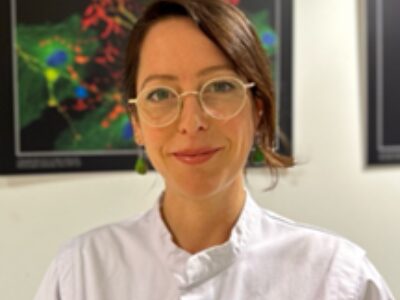
AuroreThibaut, PhD, is a physical therapist (2010) who specialized in neuroscience (2011) and obtained her PhD in Medical Sciences in 2015. She is a research associate FRS-FNRS (tenured since 2021), associate professor at the ULiège (Belgium), and leads the NeuroRecovery Lab, GIGA-Neuroscience, ULiège together with Prof Nicolas Lejeune.
Her research focuses on neuromodulation techniques to enhance neural activity in brain-injured patients, combining neuroimaging and electrophysiology to objectify brain plasticity. She has conducted 10 clinical trials, including international multicenter studies. Following her PhD, she completed a two-year postdoctoral fellowship at Spaulding Rehabilitation Center, Harvard Medical School (Prof. Fregni), deepening her expertise in non-invasive brain stimulation.
She has published over 190 papers in PubMed-indexed journals, including The Lancet Neurology, Annals of Neurology, and Nature Reviews Neurology, has an H-index of 54, and has given numerous invited talks at international conferences.
Beyond research, Dr. Thibaut is an associate professor at ULiège, invited lecturer at ULB, and since 2026, co-chair of the IBIA DOC-SIG with Dr. Schnakers. Clinically, she contributed to the elaboration of the Concussion Care Pathway at the University Hospital of Liège in 2020, which she coordinated until 2024, and continues to be actively involved in the clinical assessment of patients with disorders of consciousness.
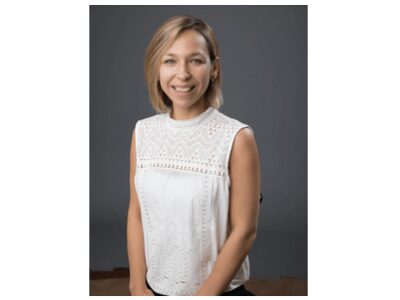
Dr. Caroline Schnakers has been working as a clinical scientist in the neurorehabilitation field for the past 20 years. Her work focuses on research on brain-injured patients with Disorders of Consciousness (DOC) and, more particularly, on the assessment of their brain activity and cognitive functions using behavioral, electrophysiological and neuroimaging techniques. She has published more than 160 articles (H-index: 62) in international peer reviewed journals such as Neurology, Annals of Neurology, and Lancet. Dr Schnakers is currently the Associate Director of the Research Institute as well as the Program Director of C3DoC at Casa Colina Hospital and Centers for Healthcare (Pomona, CA). She also has a faculty appointment as Adjunct Research Assistant Professor of Neurological Surgery at the Keck School of Medicine (University of South California - USC). Finally, she serves as the Chair of the Special Interest Group on Disorders of Consciousness for the International Brain Injury Association (IBIA DoC SIG).
Registration
Registration____________________________________________________________________________________________________________________
Recent Webinars
Pediatric Concussion Care in 2026: What’s New in the Living Guideline
Speaker: Jennifer Dawson, PhD
Date/Time: Wednesday, November 4, 2026, 12 PM ET
Organized by the Concussion-mTBI Special Interest Group
The evidence on pediatric concussion continues to evolve, and our clinical guidance and knowledge translation approaches need to keep pace in order to ensure everyone has access to up to date best practices. This webinar will share recent updates to the Living Guideline for Pediatric Concussion, which includes evidence based and expert informed clinical guidance and recommendations related to diagnosis, early management, return to activity and school, persisting symptoms, concussion in young children, and prevention of concussion. We will also share some of the ways we are working to make guideline recommendations easier to access and use, including the development and evaluation of an AI-enabled chatbot for healthcare professionals, patients, families, and others supporting children and youth with concussion. The webinar will also reflect on lessons learned from more than a decade of developing and putting pediatric concussion guidance into practice.
Speaker Information
Jennifer Dawson, PhD, is a Research Associate at the CHEO Research Institute, a Guideline Developer for the Living Guideline for Pediatric Concussion, and the Lead of Patient Engagement for the TRANSCENDENT Concussion Research Program. For the past 8 years, Jennifer has contributed to the development, updating, and knowledge translation of the Living Guideline, working with researchers, healthcare professionals, patients, families, and community partners to help translate evolving concussion evidence into practical and accessible guidance and resources. Her work also focuses on meaningful patient and community engagement in concussion research and developing innovative approaches to knowledge translation. Most recently, this has included exploring new ways to help healthcare professionals, patients, families, and others in a child’s circle of care more easily access and use trusted, evidence-based pediatric concussion information.
Registration
____________________________________________________________________________________________________________________
Resilience Following Brain Injury Through a Social Cognitive Lens
Speaker: Dawn Neumann, PhD, FACRM
Date/Time: Thursday, October 8, 2026, 11 AM ET
Organized by the North American Brain Injury Association
Recovery from brain injury (BI) is highly variable, with resilience playing a critical role in outcomes. This presentation examines a process model of resiliency, highlighting how social cognitive impairments hinder resilience and place individuals with BI at risk for poorer outcomes. Attendees will be provided with targeted assessments and treatments to modify these deficits, fostering resilience and leading to optimal recovery after BI.
Speaker Information
Dawn Neumann, PhD, FACRM is a Research Scientist and Manager of Brain Injury Research at JFK Johnson Rehabilitation Institute. She has a PhD in Rehabilitation Science from SUNY Buffalo, NY and her MA in Psychology from Rutgers, NJ. Her research aims to advance the understanding and treatment of social cognition and emotion dysregulation deficits after traumatic brain injury. Currently, she is assisting with the conduct of the Hyperbaric Oxygen Therapy clinical trial in Veterans with traumatic brain injury, in addition to completing her own DoD clinical trial in service members and civilians with TBI, examining an intervention she developed to improve emotional awareness and psychological health. She serves on the Journal of Head Trauma Rehabilitation editorial review board and she is an active member of the American Congress of Rehabilitation Medicine (ACRM), where she has been honored as Fellow for her contributions to the organization. She has received several awards from ACRM for research work in brain injury, including the Deborah Wilkerson Award, Mitchell Rosenthal Award, and the Joshua Cantor Scholar Award.
______________________________________________________________________________________________________________________
Perturbing Consciousness: Multimodal Neuroimaging in the Numinous and on the Verge of Oblivion
Speaker: Naji Alnagger, PhD
Date/Time: Wednesday, September 16, 2026, 11 AM EDT/5 PM CEST
Organized by the Disorders of Consciousness Special Interest Group
Neuroimaging can produce a wide range of structural and functional metrics, but their comparative clinical relevance remains unclear. The first part of this seminar will examine their diagnostic value in disorders of consciousness and consider how sedation influences functional measures. The second part will explore how we can engage multimodal neuroimaging in personalised whole-brain models as preclinical tools to evaluate potential treatments and probe their mechanisms. I will present results from a virtual clinical trial investigating the novel treatment approach of using psychedelics to increase the complexity of brain activity and discuss this therapeutic approach more generally. I will also present work using a similar modelling approach to investigate paradoxical responses to propofol sedation.
Speaker Information
Naji Alnagger, PhD, is a British Postdoctoral Researcher at the Coma Science Group in Liège, Belgium. He completed his undergraduate and postgraduate studies in neuroscience and psychopharmacology at University College London. He later joined the Coma Science Group in 2021 to begin his PhD where he uses multimodal neuroimaging and computational modelling in patients with disorders of consciousness and during altered states induced by anaesthetics and psychedelics. His work focuses on understanding the relationship between brain structure, functional dynamics, behavioural responsiveness and conscious experience.
______________________________________________________________________________________________________________________
A Network-Level Approach to Non-Invasive Neural Stimulation for Severe Brain Injury
Speaker: Marie Vitello, PhD
Date /Time: Wednesday, June 17, 2026, 11:00am ET
Registration: Click here.
Organized by the Disorders of Consciousness Special Interest Group
This webinar will introduce a network-level framework for classifying, selecting, and comparing neural stimulation approaches in disorders of consciousness (DoC), providing an overview of the current landscape in the field. In the second part, findings from a randomized controlled trial on transcutaneous auricular vagus nerve stimulation (taVNS) in ICU patients with DoC will be presented, emphasizing its safety profile and clinical effects. Together, these elements aim to explore how these stimulations can be integrated into the care of patients with severe brain injury and contribute to the development of more targeted, patient-centered strategies.
Speaker Information
Dr. Marie Vitello is a Clinical Neuropsychologist and Research Fellow at the University of Liège, Belgium. She holds a Master’s degree in Clinical Psychology and a PhD in Medical Sciences. Her expertise focuses on the multimodal assessment of patients with severe brain injury and disorders of consciousness, as well as on experimental therapeutic approaches using non-invasive neural stimulation.
______________________________________________________________________________________________________________________
Spasticity in Acquired Brain Injury: From Research Trends to Imaging-Based Prediction
Speakers: Salvatore Facciorusso, MD, and Stefania Spina, PhD, MD
Date/Time: Wednesday, April 15, 2026, 11:00am ET
Registration: Event has passed.
Organized by the Disorders of Consciousness Special Interest Group
This webinar will provide a two-step perspective on spasticity in acquired brain injury, with a particular focus on post-stroke spasticity. In the first part, we will present an updated overview of the scientific landscape through a bibliometric analysis of Botulinum toxin type A research, highlighting major themes, evolving trends, and current gaps in literature. In the second part, we will move from research trends to clinical stratification, discussing how lesion characteristics and structural disconnectome measures may improve early prediction of spasticity after stroke. Together, these topics aim to connect the evolution of the field with emerging strategies for more individualized prognostic assessment and management.
Speaker Information
Dr. Stefania Spina is a Specialist in Physical Medicine and Rehabilitation at the Policlinico Riuniti in Foggia, Italy. She holds a PhD in Innovative Science and Technologies for Health, focusing her expertise on neurorehabilitation and spasticity management. Her research combines advanced diagnostics with therapeutic analysis, with recent work investigating predictive models based on lesion characteristics and the structural disconnectome in post-stroke spasticity.
Dr. Salvatore Facciorusso is a Specialist in Physical Medicine and Rehabilitation at the Policlinico Riuniti in Foggia, Italy. He holds a Master’s degree in Technologies for Innovations in Rehabilitation Medicine and Care and has collaborated with the National Research Council of Italy. His expertise lies in the management of patients with spasticity, with a specific focus on instrumental evaluations and advanced therapeutic approaches. In this webinar, he will present an updated bibliometric analysis of Botulinum Toxin Type A research in spasticity.